The Play’s the Thing: Putting the Play back in Shakespeare. How to use performance strategies to teach Shakespeare.
Author: Ted Tibbetts
Ted has been teaching high school English for over 20 years. A Milken Award winner and a Maine Teacher of the Year State Finalist, Ted particularly loves getting students on their feet to fully immerse themselves in Shakespeare's plays. When not in school, Ted can be found living in a tent on the Penobscot river where he spends his summer guiding whitewater rafts.
We began class with a quick google forms quiz. I wanted some concrete data on how much students were understanding. In addition, I wanted some accountability so that ALL students perceive this unit as a learning experience and not just some blow-off unit.
Quiz scores were pretty solid. Everyone answered 4 out of 8 questions correctly. A few tripped over the trick detail questions like “in how many days did Prospero promise to let Ariel go free.” One student even chose one of the joke answers just because it was funny.
I was surprised that 40% of students said that Prospero saved Ariel from a storm rather than a tree. While I deliberately put that “distraction” answer in there, I thought more would not have been fooled by it.
All in all, I’m not a huge fan of those kinds of assessments anyway. I much prefer active reading notes to assess reading, but I’ll create a longer post on that sometime in the future!
Character and Space
I enjoy working with Act 2. We worked on character development the use of space. Having completed the “Screaming Sculpture” activity earlier in the year, students need only to be reminded of strategies for using space.
In Act 2, Scene 1, I have the Alonso and company enter somberly. Alonso believes that he lost his son. I place a chair in the upstage middle and tell Alonso that he can sit there after he enters…and pretend it’s a stump.
Since Antonio and Sebastian begin their plot to kill the king, I ask them to stand together, but off to the side. Moreover, since their lines complain that the island smells and offers nothing “advantageous to life,” it makes sense that they would stand around making faces and swatting at flies.
I tell Gonzalo that to portray an older person, bend every joint possible in the body, then imagine that they are locked there and you have to move everything as one unit. In addition, since there is an empty awkward silence, Gonzalo tries to fill it. Much to the chagrin of everyone else.
Then off we go.
Running the Scene
I tell Sebastian and Antonio to drip sarcasm (and review verbal irony.)
I point out that Alonso’s “you cram these words into mine ears against the stomach of my sense” offers an opportunity to “change the stage picture.” By showing his strong emotional response it makes sense for him to physically move away from the rest of the characters.
As Sebastian and Antonio begin to broach the idea of killing Alonso, I stop to talk about how people “build up” to potentially awkward conversations. This time, I had two students stand up and improvise. “Okay,” I told one of them. “You are interested in asking this person out on a date, but you have no idea whether they are interested in you or not. How do you bring up the subject?”
So we played around with the “beating around the bush” for a bit to get the feel of those conversations, then moved back to the scene after Alonso and Gonzalo fall asleep.
Here, I explained the upcoming treason section, and tell Antonio to begin a “slow journey” around the room as he convinces Sebastian to kill the king. He should plan his movements so that he arrives at the sleeping Gonzalo, lying next to Alonso, at the “Sir Prudence” line.
When Ariel awakes Gonzalo, who, in turn, wakes Alonso, I love telling Sebastian and Antonio that they’ve been caught and need to come up with an excuse to cover the drawn swords. Busted!! What do you do? This suggestion helps better capture the energy of the end of the scene.
Act 2 Scene 2
The Caliban, Trinculo and Stephano scene is even more fun, and fairly straightforward. I had Caliban kick some crumpled up paper around on his entrance to generate some frustrated energy so the he “needs must curse.” Then hide under a sweatshirt upon Trinculo’s entrance. I tried to conjure up some fear in Trinculo about the upcoming storm (with various degrees of success.)
Caliban the footlicker
I try to reinforce embedded stage directions, as well. How do you know he smells like a fish? Has legs? How do you know he’s warm?
I instructed Trinculo to lie down under the sweatshirt head facing Caliban’s feet and explained to the class that in Shakespeare’s time it was common to rent a hotel bed, not a room, that may actually have a “bedfellow” stranger in it. (That usually generates some hullabaloo!)
I told Stephano to sing the song loudly and badly. The more of each, the better.
The Trinculo felt a bit reticent this year, so I didn’t have Stephano grab him by the legs and yank him out from under the sweatshirt like I usually do. I did, however, ask him to act to the embedded stage direction in Stephano’s “do not turn me about. My stomach is not constant” line.
All in all, comprehension seemed solid. Interestingly enough, for better worse, my typically less enthusiastic class is outperforming my other two classes which seemed lackadaisical today. Part of could be the end of the year…I’m not sure. Hopefully, energy will improve with them.
If your classroom in any way resembles mine, the first mention of “Poetry” often sparks nearly unanimous cries of protest. Suddenly I feel like Antony fighting for my life, defending poetry like it’s Caesar’s corpse.
But I don’t want to bury poetry behind SAT prep, Common Assessments and grammar rules. I want to praise poetry. I want to reveal to students the art that lies in artistic expression. That they can expect, nay, DEMAND, I higher quality of art than we often must endure…the kind Bo Burnham satirizes in “Repeat Stuff.”
Bo Burnham
And, like anything worthwhile, the complexities require scaffolding to learn. Antony didn’t win over the crowd immediately. I won’t win over students immediately. (I definitely won’t if I push too hard too soon.) So I use a process.
I like to begin by talking about golf. I’m not a good golfer. In fact, I once wrote a song called “Double Bogey’s Par for Me.” However, my “Patented Poetry Perusal Process” fits the golf metaphor.
I ask my students, “Who has played golf…even mini-golf?” Of course, most have. “How many holes-in-one do you get?” And, of course, hardly anyone.
“So let me get this straight, you hardly ever get a hole in one? Why not? It’s too hard? Then why do people play?” And we talk about golf really being about a multiple step process of overcoming obstacles to get the ball in the hole.
Exactly. Just like poetry. People struggle with complex poems because they expect to get hole-in-ones on par four texts.
Then I draw this picture on the board:
Golf and Poetry
On a typical par four hole we expect to achieve our goal on the fourth shot. For our first shot, the tee shot, we just want to move ourselves in the general direction of the flag. It doesn’t matter if we’re a few feet left, right, closer or farther away. We just hope to be in play somewhere in the fairway. In poetry, we want to do the same.
First, we just read the poem and garner some first impressions. I tell students to see if they can answer these questions in general and broad terms. “Be like a cave man or woman,” I say. Think “Good?! Or Bad?!” And feel free to grunt.
What might the title mean? Does it establish some sort of context?
What’s the poem generally about? The ocean? War? A Wheelbarrow?
Does the imagery paint a happy picture or sad? Bright or dark?
Is it in first person so that the speaker might represent a character
Is it regular and structured or irregular and seemingly random?
What words do I not know that I need to look up?
If we can answer these questions at all, I’d say we’re moving in the right direction. Consider ourselves in play in the fairway.
In golf, we want to use the next two shots to get onto the green. While, in golf, players must take one shot at a time, poetry analyzers can combine the next two steps, or take them one at a time. Either way, we need to identify the poetic devices and their effects while deciphering the meaning of each line.
By analyzing the effects of the poetic devices we answer questions four and five in more detail. We should look for the use of figurative language, sound devices, rhythm, and possibly irony. This process should also refine our sense of tone. In addition, this second or third reading should also clarify our understanding and interpretation of each line.
Now that we are on the green, precision becomes important. All of our previous shots have gotten us close to our goal, now our job is to place the ball in a four-inch window. In poetry, we want to establish a theme statement. What does the poet say to the world through this poem?
Using this process with students empowers them to take their time. I emphasize tho them that they are NOT STUPID if it takes them three or four readings to figure out what’s going on. Like golf, it means that it was a challenging hole and the poet is addressing a complex subject.
Once I’ve established the process, I move on to specific poetic devices.
Teaching Poetic Devices
I introduce many poetic devices using songs. As a musician, I can bring in my guitar and sing songs that illustrate the various devices. I want to do as much as I can to capture interest and my mediocre performances seem to be just enough to engage students.
I introduce the concept by listing terms and definitions on the board and explain the concepts. Then I play the song. Sometimes we will discuss the song as a class and sometimes I will put students in groups and have them analyze the poetic device, then discuss the song as a class. For homework, I ask students to find the poetic device that we covered that day in a poem or song on their own and write a short analysis explaining its effect on the overall work.
As a high school teacher, I find that most of my students have a basic understanding of similes metaphors and personification. I find that I can move them into more sophisticated concepts like extended metaphors, metonymy, and synecdoche. I also add allusion into this lesson simple because the song that I use to teach figurative language contains an allusion.
I love using John Hiatt’s “Through Your Hands” to teach metaphor, and, if you want to get even more sophisticated, metonymy. I also reinforce the poetry process. I draw the golf image on the board and guide students through that path as we examine how figurative devices shape the meaning of the song.
In addition, the reference to the “burning bush” also provides an opportunity to talk about the power of allusion.
After “Through Your Hands” I use Sting’s “Fortress Around Your Heart” to teach extended metaphor. First, though, I introduce the concept of extended metaphor by drawing (badly) a rose on the board, an equal sign, then the word love. I explain that an extended metaphor works by establishing a broad comparison, then breaking down the comparison into parts. (“Okay, if love is a rose, what do the roots represent? The flower? The thorns?”)
Then I give students a chart play the song. I ask them to place the references from the song in the left-hand column and list possible interpretations in the right-hand column. I list the first few, the “fortress,” “walled city,” and “cries of truce” for them to get them started.
As always, I model the poetry process. As a class, we talk through the first read-through questions. In addition, I reinforce figurative language learning by asking, “You can’t literally put a fortress around your heart, can you? No? Then it’s probably a metaphor. What could it mean?”
After we’ve created momentum by establishing that the “fortress” most likely means an emotional barrier, I direct students to work in groups and interpret as many possible metaphors in the song and record them on their chart.
Afterwards, as a full class we discuss that the speaker most likely emotionally injured the character to whom he speaks, causing her to build a fortress. Students share their interpretations of the various potential metaphors.
They particularly like the idea that the speaker can’t “fill” the emotional damage of the “chasm” but hopes to “build a bridge” to overcome it. I love the artistry of the spin at the end. In the subtle line, “this prison has now become your home,” Sting takes the image of a fortress, designed to protect by keeping people out, and flips it, making it a prison that traps by keeping people in.
Many songs work to illustrate these concepts, but I really like “Last Goodbye,” by Kenny Wayne Shepherd. Not only does it contain several sound devices, but it also provides opportunities to review figurative language.
Like the previous lessons, I begin by defining and providing examples of exact, approximate, internal and external rhymes and rhyme schemes. I also define alliteration, assonance, and onomatopoeia.
After I play the song, I ask students to complete the rhyme scheme and identify as many of the terms that we defined as possible. (Not a lot of onomatopoeia in this song, but everything else!)
Once again, we review the poetry process by answering our initial read-through questions, discuss the effect of the sound devices, review the figurative language like “time was just a fist of change tossed in the water just in case” (I love that line!) and “door closes another one opens.” Finally, I have them craft a theme statement.
Teaching Rhythm/Meter
Teaching meter presents significant challenges. It reminds me of the first “band” I tried to form with my two cousins. Dan, a guitar player, has a great ear. He can pick up song relatively quickly. I can play guitar and sing (or, at least, remember the words) so we needed Dan’s brother, Mark to play drums. We set him up on the kit and showed him the basic rhythmic pattern. As long as we stomped out the pattern with him, he could stay on beat. As soon as we began playing and singing, however, the drums started to sound like drunk carpenters (Tradesmen, not the band!)
Similarly, in my experience with students I have found that people either have rhythm or they don’t. It’s a difficult concept to teach. So I work to get all students to know that meter exists and that it is often mostly either regular or irregular. Regular rhythms tend to move faster and feel brighter while irregular rhythms tend to feel slower and darker.
I introduce the concept by writing several student names of the board, which usually gets their attention. Then I ask them, “When I say these names, which sylABle should I place the emPHAsis?” After they’ve looked at me quizzically and I’ve repeated the line several times, students laugh and begin to understand my point. Then we scan their names by placing accent and unaccented marks over the syllables of their names.
Scanning Student Names
“Okay, on your feet!”
I direct students to stand in a circle and then form a conga line to follow me around the room. “March in this rhythm,” I say. “Left RIGHT, left RIGHT, left RIGHT. Repeat after me: I DO not LIKE green EGGS and HAM. I DO not LIKE them SAM I AM.”
“Left RIGHT, left RIGHT, left RIGHT….”
“But SOFT what LIGHT through YONder WINdow BREAKS / It IS the EAST and JULiet IS the SUN. / ArISE fair SUN and KILL the ENVious MOON who’s SICK and PALE and PALE with GRIEF…”
I then invite students to sit down and I write out Romeo’s line on the board and divide it into syllables. “Okay, which words or syllables receive the emPAHSis? After we’ve placed the accent marks, I ask, “After how many syllables does the pattern repeat?”
“Two!”
“Exactly.” Then I draw brackets over every two syllables. “These are called ‘feet,’ like measures in music. This particular foot, with the pattern of an unnaccented syllable followed by an accented one is called an Iamb. “How many feet in this line?”
“Five!”
“What’s the prefix that means five?”
“Pent!”
“Absolutely, you guys are super geniuses. And here we are addressing math standards in English class. Be sure to DEMAND that you meet ELA standards in math class. Since these lines are composed of five iambic feet, this particular construct is called iambic pentameter. Would you consider it regular or irregular?”
“Regular!”
“Exactly. It will tend to go faster and more smoothly.”Then I add the nursery rhyme line “Hickory Dickory Dock, the mouse ran up the clock.” (This is a great one since it begins in dactyl feet and ends in iambs.)
I move away from music to teach rhythm because the beat of the music often supersedes and obscures the rhythm of the language. I find “Woman Work,” by Maya Angelou, to the the BEST poem to illustrate not only the concept of regular and irregular rhythm but also how the meter underscores the meaning of the poem.
I usually have students complete this task on their own, then we discuss it as a class. I ultimately want students to understand that the rhythms at the beginning are repetitive and fast, like her chores, while the slower rhythms at the end underscore the break and rest that the poet desires.
Teaching Irony
My Favorite Hat
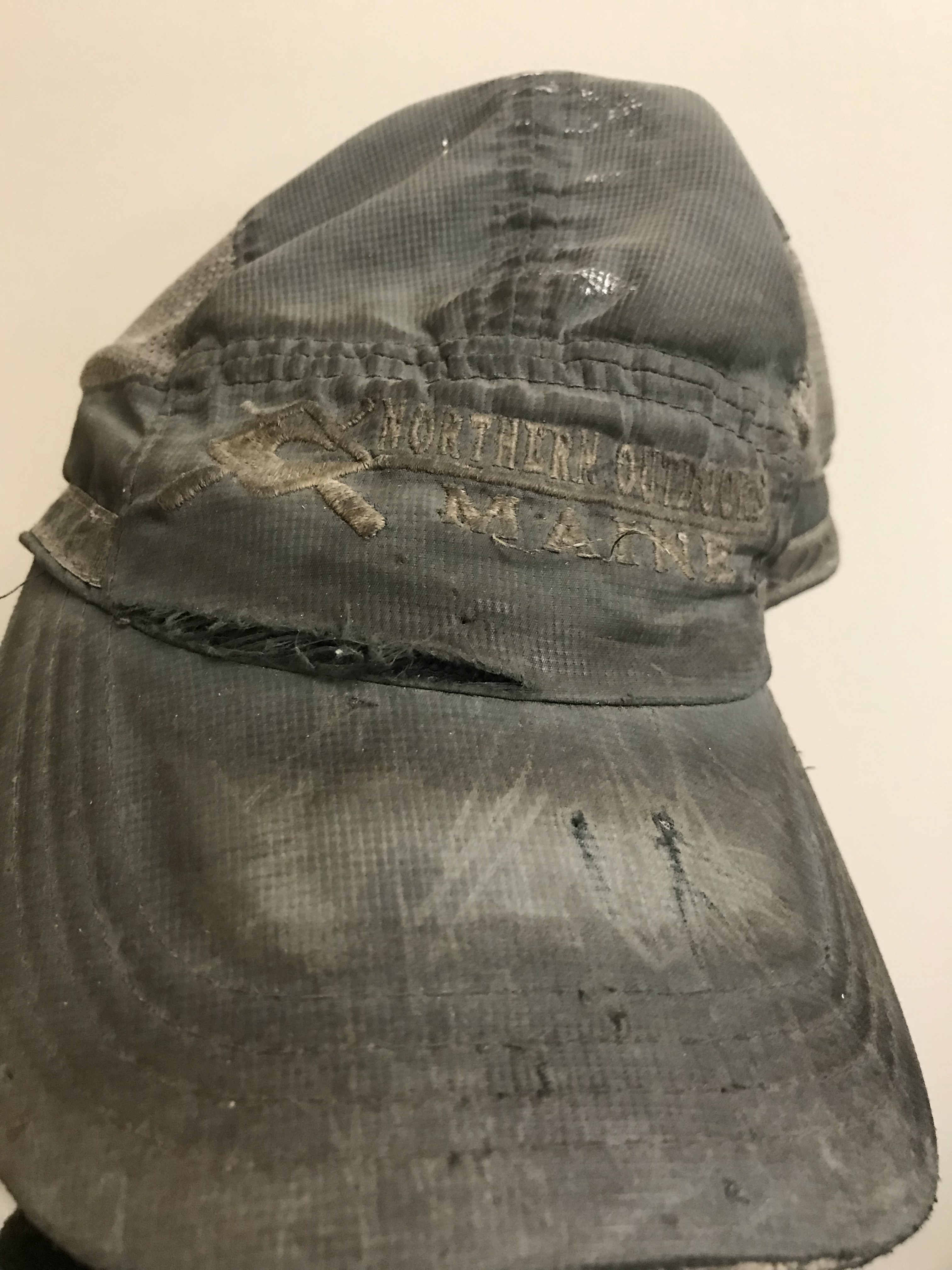
I teach the three types of irony: verbal, situational and dramatic. I explain that verbal irony is saying one thing but meaning the opposite. Like when my lovely bride says, “nice hat.” I point out that all sarcasm, with intent to criticize, uses verbal irony, but not all verbal irony, with intent to amuse, is sarcasm.
I find the trick to teaching verbal irony is to ask students, “how do you know, without paying attention to the tone of their voice, if someone is being sarcastic?” After discussing several scenarios, one of them usually involving my hat, we come to the conclusion that when there’s little possibility that the statement can be true, then verbal irony is likely.
I don’t always dedicate a song to illustrate verbal irony but when I do I use Annie Lennox’s “I Need You.”
I need you to pin me down For one frozen moment I need you to pin me down So I can live in torment I need you to really feel The twist of my back breaking I need someone to listen to The ecstasy I’m faking I need you
Since it’s highly unlikely anyone would “need” these things, it’s more likely that the narrator is using verbal irony to criticize.
I ask students what effect might dramatic irony, when the reader or audience knows something that the characters do not, have? I point out that in horror movies, when we know that the ax murderer is hiding in the closet but the protagonist does not, creates suspense. In the movie Mrs Doubtfire, however, (believe it or not, most students have seen it) it creates comedy.
The complexity of true Situational Irony challenges many students. I define it as “a discrepancy between expectations and reality in an appropriate way.” For example, the fire station burning down is ironic. We EXPECT that the fire station has the means to put out the fire. In REALITY, however, it burns down. It is APPROPRIATE because fire destroyed it. If aliens came and nuked the fire station, it wouldn’t be ironic. Similarly, if a famous gunslinger in the West shoots himself in the foot and dies, that’s ironic. We EXPECT that he knows how to safely handle a pistol. The REALITY that he dies APPROPRIATELY from a self-inflicted gunshot wound is ironic. A rabid elephant running him over wouldn’t be ironic. Just weird.
My favorite songs to illustrate situational irony are “Cat’s in the Cradle” (G rated) and “Taxi” (PG-13) by Harry Chapin. In “Cat’s in the Cradle” the narrator hears his son claim that he wants to grow up to be like his dad, busy and “important.” The son does turn out to be like his dad, busy and “important,” but also like his dad: too busy for family.
“Taxi,” beautifully structured, contains balanced examples of irony. The narrator, a taxi driver, picks up a woman as a fare dressed in a gown on a rainy Friday night. He soon realizes that she is an old romantic interest. They split up, however, because she wanted to be an actress and he wanted to “learn to fly.” Chapin reveals the irony at the end when he says:
And now she’s acting happy Inside her handsome home And me I’m flying in my taxi Taking tips and getting stoned
Both of them express a discrepancy between expectations and reality in an appropriate way.
Re-teaching and Reinforcement
After covering each concept one lesson at a time I like to spend a class covering two or three songs/poems as a review. Students can practice identifying and analyzing the effect of many of these devices in one text.
I love playing the Police’s “Wrapped Around Your Finger.” Not only does it sound haunting on an acoustic guitar but it also presents sophisticated rhymes (apprentice / Charybdis), allusion, and metaphor/symbol. The narrator, a “young apprentice” initially infatuated with an older married woman ultimately turns her “face to alabaster” when she realizes that her “servant is [her] master.”
In addition, now that students have developed skills, I begin introducing more complex and more traditional poems. When I believe that students are ready I give them a practice exam, then the summative assessment.
Strategies for Teaching Shakespeare Sonnets
Since students have studied poetic devices, I begin the sonnet lesson by simply handing one out. I remind them to use the “Patented Poetry Perusal Process and answer the initial read-through questions. In addition, since students know how to complete a rhyme scheme I have them do that. And I ask them to scan the meter.
Sonnet Structure
After we discuss these responses, I explain the sonnet structure. I explain that sonnets, 14 line poems, can be broken into three quatrains and a couplet. The first quatrain introduces a problem and the second quatrain expounds or develops it further. The “turn” comes at line nine where Shakespeare introduces some sort of shift for the third quatrain. Finally, the couplet arrives at the solution to the problem established in the first quatrain.
Sonnet Puzzles
Sonnet Puzzle
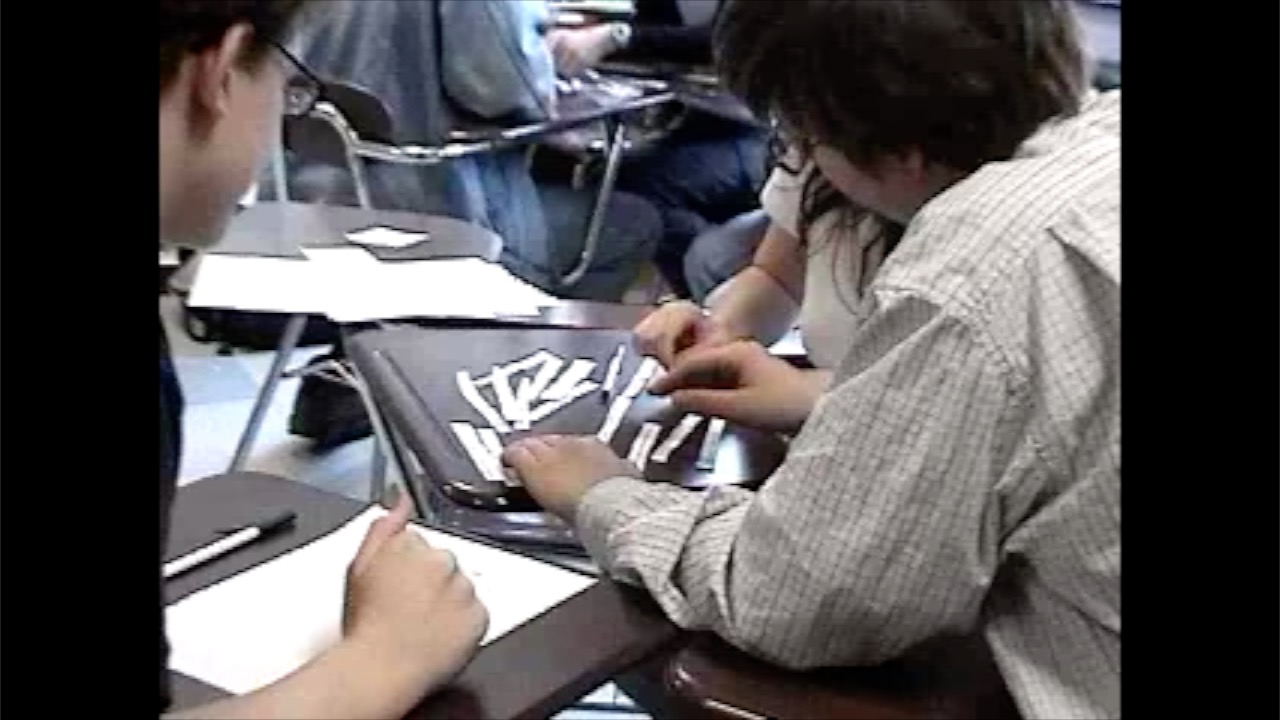
After putting students into groups of three or four, I give each group an envelope containing two sonnets. I have cut one of them into four parts: three quatrains and the couplet. The other I have cut into individual lines. Since it’s easier, I have them assemble the first puzzle first. They put the quatrains in order then add the couplet at the end. Then they tackle the second sonnet. Based on the rhyme scheme, punctuation, and meaning, they put the lines in order.
Acting Sonnets
To perform sonnets, I put students into larger groups of six to eight. They work to create a dramatic performance of their sonnet similar to the “15-Minute Play” or “Puppeteer” activity.
I break them into groups, give each group a different sonnet, the directions, and rubric. The preparation process usually takes about 45 minutes, and the performances take about 20 minutes.
Conclusion
Many students may initially express an aversion to poetry. As with most aversions, they are often grounded in fear and ignorance. By appropriately scaffolding skills and knowledge and using music to make concepts more relatable, however, I have found teaching poetry a pleasant experience!
When I was a kid, I loved Wonderbread. Seems odd now…I think it tastes like paste. Then again, I liked paste when I was a kid, too.
Paste and Wonderbread…not really much flavor there. White, bland, lacking in nuance.
Unlike Shakespeare. The complexities of language stimulate the eyes, the ears, and the heart. Like Tim O’Brien says in The Things They Carried, you can feel a true war story with the stomach.
However, without sophisticated language skills, it is impossible to truly experience the full effect of Shakespeare. It takes a developed palate to appreciate artisan whole grain bread, so we must help students develop an appetite for dense language.
I begin teaching the concept of connotation by drawing a line on the board. I explain that the line represents a continuum of negative feelings, or connotation, on the left and positive feelings on the right. Then, right in the middle, I write the word “economical.” Then pick a random student and make up a story.
“We all know that Chad has been working a lot lately. He’s been saving up for a new truck. Been doing pretty well, too, banked a couple hundred dollars last week. But, he just started dating this girl, and it’s her birthday, so he has to choose: money for his truck or for a birthday present? He needs a truck to get to work, but he really likes this girl.
Let’s say we like Chad, and respect his choice to spend $8 on some flowers from the grocery store. What word would best describe his financial choice? Frugal? Yes, that means responsible with money. Now let’s pretend that we’re jealous. We like the girl and would spend more money to really demonstrate our affections. How would we describe Chad then? Cheap? A Tightwad? Absolutely.
See how the three words mean essentially the same: conservative with money. However, they carry different emotional meanings, or connotations, which reveal tone…how the writer or speaker feels. ‘Frugal’ shows that we respect Chad. ‘Cheap’ reveals that we despise him. ”
That’s my introduction. I will then reinforce the concept with another triad of similar words, skinny, thin, and slender, perhaps, or sluggish, slow, and leisurely.
…a ray of sunshine
Many times I will transition this lesson directly into one about similes and metaphors. I make the point to students that when invoking a comparison, a writer invokes the emotional value of that object. For example, the metaphor “Catherine is a ray of sunshine in her father’s life” conjures the positive aspects of sunshine: warmth and brightness. Or, on the other hand, the indirect metaphor, “Catherine slithered into the room” invokes the negative connotations of a snake: deceitful, venomous, and evil.
Once students understand how specific word choices reveal tone, we can begin exploring how Shakespeare employs this concept. I find that, at first, when many students read Shakespeare I feel like I’m eating Wonderbread again. There’s hardly any inflection, little emotion, and, even in a performance setting, no facial expression or body language. In these situations, students have not had an opportunity to connect with the text.
Dropping in…
This process, however, provides a chance to relate the language to their memories and prior knowledge. It’s based on this activity from Shakespeare and Company called “Dropping In.” However, I use a variation that, quite frankly, I can’t remember how much came from the workshop that I attended, additional reading, or adaptation over time. But anyway, it goes like this:
I put students in groups of four and give them a section of text that contains connotation laden language. I ask them to read through the passage and make a list of the powerful words. After each group has selected their words, I model the following process then ask each group to continue on their own.
Each student takes a turn in the “hot-seat.” They don’t have to do anything but think and point. The group chooses a word from the list on which to focus. Then they take turns asking the hot-seat student a question about that word. When they formulate a question, they raise their hand. When the hot-seat student points at them, they may ask the question. The hot-seat students don’t answer, they simply think about their response. During that time, the other group members think of other questions and raise their hands. It is important that group members raise their hands. If they blurt out questions before the hot-seat student has had an opportunity to process the previous question, then the opportunity to “form bonds” with that word has been lost.
Let’s consider, for example, the word “rage.” I might ask:
When’s the last time you felt rage? Have you ever caused someone else to feel rage? Does rage build slowly or come in a flash? Where in the body does rage live? If one particular animal symbolized rage, what would it be? If you wanted to communicate rage with a musical instrument, which one would you use?
I tell students to ask as many questions as they can. When they begin running out of questions, move on to the next word. If I have an actor working on a particular speech, I leave that person in the hot-seat. If we are doing classwork, I rotate each group member through the hot-seat with each new word. I find that although being in the hot-seat intensifies the experience, all group members receive the benefit of internalizing the questions.
After the groups have covered their list of words, or after a set amount of time, whichever best meets the needs of the lesson or class, I have each student stand with a copy of the text, and recite the passage, out loud, to the wall. (Or, if I’m in the theater I have them perform it out to “the space.” If I have them face the middle of the room they become distracted looking at each other and do not fully engage with the text.) Then we discuss as a class, “how did you find reading the passage at the end as opposed to the beginning?” Inevitably, students say that not only did the passage make more sense but it also seemed to resonate much more…they were better able to see and feel the images.
MaryAnn as Falstaff
One of my most powerful experiences with this activity came from working with MaryAnne. As a student, she struggled with the decoding of text but performed well once she embedded the language into her head. She was working on a monologue from Comedy of Errors. She had picked out her list of words and several of her cast mates and I sat on the stage asking her questions.
After we had finished, she stood up and performed the monologue for us. The words seemed to resonate from somewhere deep. They carried tone, color, and nuance. We could hear and see the connotation of all the power words. And she, too, seemed to be carried off somewhere. When she finished, she just stood there. We just sat there, not just rapt in the performance but aware that we were witnessing someone fully experiencing Shakespeare. I remember her shaking her head, blinking her eyes several times and saying, “the words…the words.” I truly believe that she had, in some manner, hypnotized herself with the language.
On the other end of the spectrum, I find that some classes need me to help them maintain an academic environment. There’s a fine line between having fun with some silly questions and not taking the activity seriously Other students may need help them come up with questions. , so be prepared to help focus some groups and help create questions. Perhaps even a reference sheet with questions like “When was the last time you felt______?” “What’s your strongest memory of__________?” would be useful for struggling students.
So much of the artistry in Shakespeare comes from his word choices. His working vocabulary of 50,000 words, however, often overwhelms students with developing verbal palates. Teach them to chew, however, and really savor the subtle flavors of each morsel, and they will never go back to Wonderbread.
Students often struggle to get beyond themselves while acting Shakespeare. And understandably so. Wrestling with complex language in front of a jury of their peers can raise anxiety levels. By emphasizing “playing” with the language and the themes, however, teachers can help students find the relevance in the text, the meanings of the words, and the power of Shakespeare.
Early in my teaching career, I was fortunate to have several of my students participate in a summer Shakespeare program. I found the director at the time, Henry Wishcamper, a genius at connecting adolescents with Shakespearean text. He had an uncanny knack for making the situations relevant to them by invoking their imaginations and feelings when performing. So not only did I pop into summer rehearsals from time to time to watch him work, but when I directed my own Shakespearean acting troupe, I often invited him to workshop with my students. I learned as much as them.
One fall we were all learning a monologue, so I invited Henry to workshop with us. One student was working on Benedick’s “I do much wonder that one man, seeing how much another man is a fool” speech from Much Ado. Henry took several minutes to construct a mini-man-cave set out of a couch, and table then built a mock TV with a stack of books.
“Okay,” he said to the student. “The big game is on. You’ve been excited all week for it because your buddy Claudio has been planning on coming over to watch it. You made wings, you’ve got chips. And he just called and ditched you because he needs to go to the mall with his girlfriend.”
He continued to coach the student through the scene by having him start on the couch, (“Here, pretend this cell phone is the remote.”) then work himself up into a rant pacing around the room. Then, what if you saw a commercial on TV with a girl in it? Maybe that sparks the ideas of “Rich she shall be that’s certain.”
Suddenly, the text didn’t seem so abstract. It has context. And energy.
This technique works really well for what I call the Aubade scene in Romeo and Juliet. Romeo must leave Juliet’s room before dawn lest authorities (or, more frighteningly, Juliet’s mother) catch him violating the terms of banishment. Of course, neither of the two want to be separated, but the Nurse bringing news that “Your lady mother is coming to your chamber,” certainly raises the stakes.
I usually scatter several “incriminating objects” around the performance space: a love letter, a belt, a picture of Romeo, (you can get really creative here). Then I tell Juliet, “Okay, mom’s coming, you’ve got to clean this stuff up without getting caught.” Now there’s a sense of urgency! Sometimes, if I have students that would respond well, I set up a game. I tell the student playing Lady Capulet, outside the room, that “you suspect SOMETHING, just not exactly sure what. Be looking for something incriminating. If you find it, you get to make Juliet sing an embarrassing song in front of the class.” Then I come in and tell Juliet, “Your mother’s coming. If she discovers that Romeo was here you have to sing an embarrassing song in front of the class, If you get away with it, SHE has to sing the song.”
This often creates hilarious improvisation. I’ll sometimes cheat and toss something on the floor at the last minute. Suddenly Juliet has to stand on it, distract her mother, then hide the object behind her back or stuff it into her pocket. Again, it creates energy for the actors and the class while providing opportunities for actors to find authentic stage business to bring the text to life.
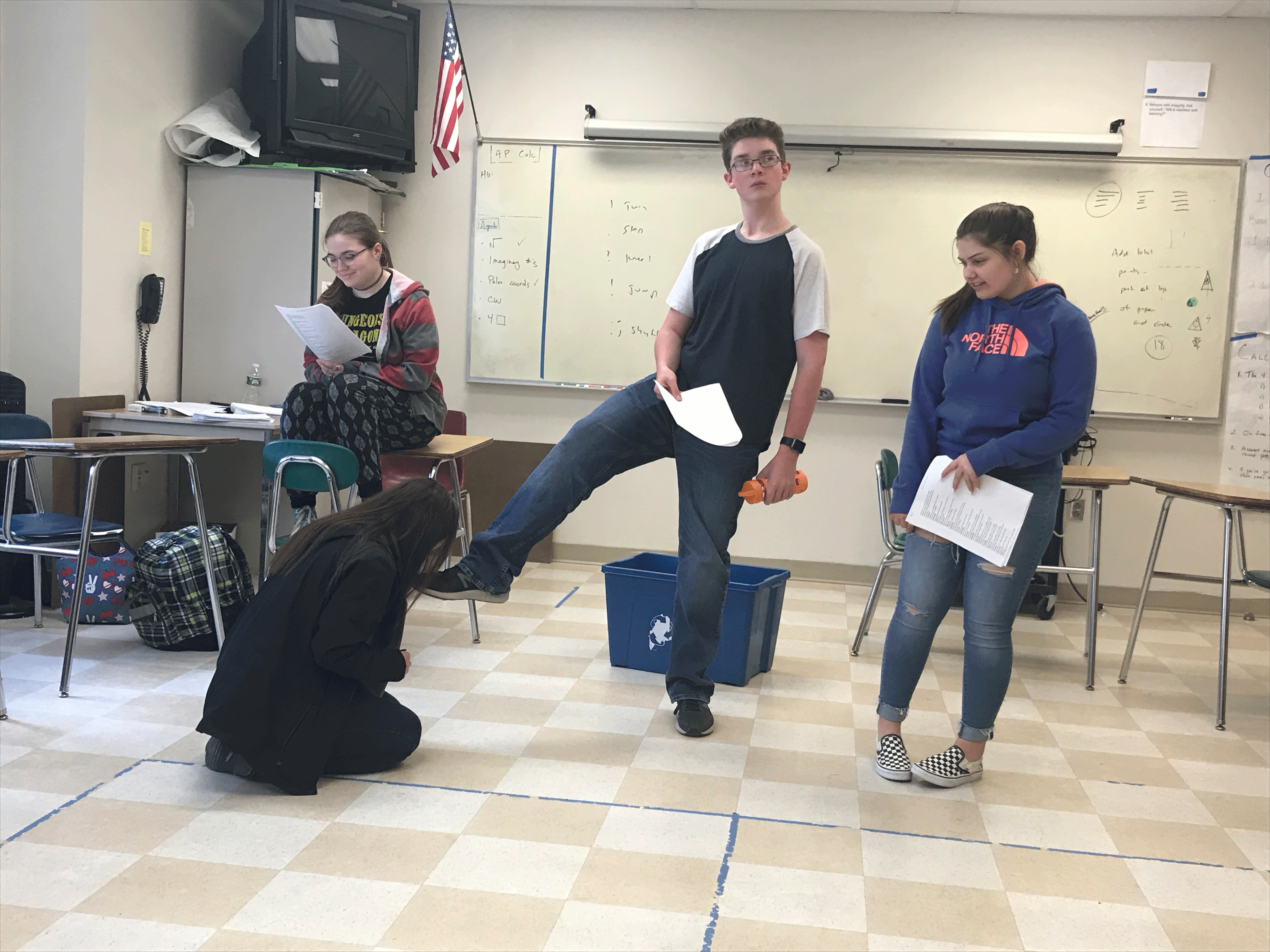
When teaching Antony’s “I come to bury Ceasar not to praise him” speech I come to class armed with a paper recycling bin. I tell all the students to grab three or four pieces of paper, crumple them up, and prepare to throw them at Antony.
Then I tell Antony, “you’ve got a hostile crowd here. If you don’t win them over, well…they’ll probably kill you.” Then I tell the class, “when Antony first speaks, feel free to boo him. Throw paper at him. Not too much at once, you may want to save some ammo. However, when he makes a valid point, you’ve got to quiet down and give him his due. Go back and forth. He won’t win you over immediately, but will at the end. But make him work for it.”
And indeed, Antony now has to fight for his life under a barrage of paper missiles. But it’s dynamic. Shakespeare is now fun.
For students not quite ready to manage these complexities, however, you can set the scene more simply. For example,for the Friar Laurence/Friar John scene in Romeo and Juliet, I tell Friar John, “Go out, run down the hall, up the stairs, back down the stairs, back down the hall, then burst through the door and read your lines.” Of course, he brings news that he could not deliver news to Romeo.
His “Holy Franciscan friar! brother, ho!” line, always delivered authentically breathless, helps portray appropriate energy. In addition, while Friar John runs madly through the halls I usually provoke Friar Laurence.
“Where’s Friar John? He should have been back a long time ago. I wonder what’s going on. The message was pretty important. You know how Romeo is. What’s going to happen if he didn’t get the message. You’d better find out soon.” Meanwhile, he and the rest of the class sit there with tension building. Both for the plot and to see how Friar John responds to running two flights of stairs. (Much more interesting that quadratic formulas).
Many times, scenes aren’t as, well…dramatic. They serve as exposition or to move the plot along. Moreover, since when I teach Shakespeare in the classroom, much of our text work comes in the form of cold reading. Students have never seen the script before, so asking them to “perform” it with much alacrity would be unfair.
Olivia and Viola
Thus, “setting the scene” in these situations usually entails explaining what will happen and often present some options of how the character may react. For example, in Twelfth Night, in the scene with Olivia and Viola I tell the students. “Orsino has been sending Olivia love letters for YEARS! Posting all over her social media accounts, (she would have blocked him but she’s too polite.) How do you think you’d feel, Olivia? Annoyed? Yes, for sure.
And you, Viola, you’re in a no-win situation. You love Orsino. If you achieve your mission you lose Orsino. If you fail, you’ve failed Orsino. But is your heart really in this? You’re right, probably not.
Okay, now, Olivia, at some point in this scene, you become REALLY interested in Viola. So Viola, how would you respond to this sudden interest especially since you are a woman disguised as a man who is in love with Orsino. A bit awkward, you say? Probably so. Okay, let’s run it and see what happens.
Then they act out the scene. I will often stop them and suggest different responses or actions then ask which ones they like better and why. I will often add a physical component as well like, “Here, grab Viola’s arm, put yours under hers and walk her to the door. Good! Viola, how did that make you feel? Class, what did that action say to you as the audience?” And, because this process takes time, I will often skip parts of the scene to focus on others.
And remember, our primary goal here is not to rehearse actions that would “work” in a formal theater production but simply to access points to the text. How can we help students learn Shakespeare not with only their brains but with their eyes, ears, hearts, and bodies?
These kinds of activities may represent my favorite parts of teaching Shakespeare. I like helping students make connections and see the relevance of Shakespeare–the old coot. I like seeing their creative interpretations and often hilarious actions that far surpass any directing choices that I could make. And I love watching students grow from a Shakespeare-is-too-hard-and-too-boring-I-can’t-do-it mentality to a this-is-cool-can-we-do-it-again? one. By getting out of our seats, running around, and throwing paper, we can still wrestle with rigorous texts but we can do it with more excitement.
Hesitant, inexperienced, and nervous student actors often rehearse and perform with all the urgency of a snail creeping unwillingly to school. They find it difficult to understand the importance of energy without concrete instruction. Thus, giving them an anchor of various energy levels often help elucidate the subject for them.
Here is the script I use for this activity. I model each level by doing the activity with the students.
Okay, this activity is called the Seven Levels of Energy.
No Energy!
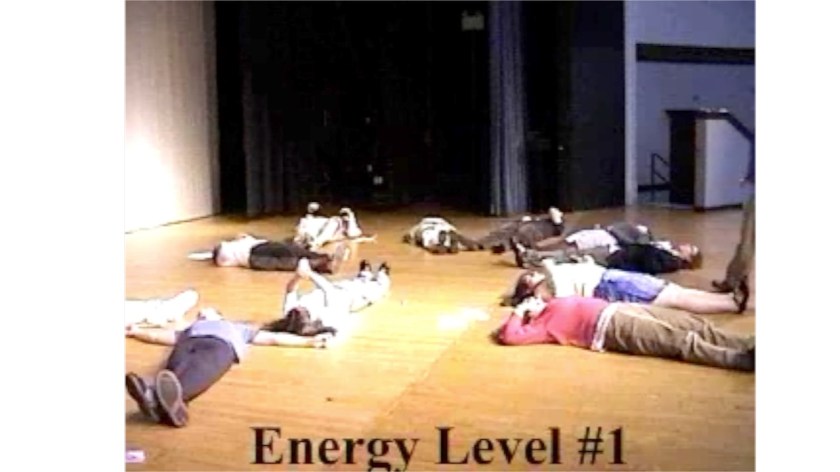
Energy Level #1
So, everyone lie down on the floor. Yes…on the floor. On your backs. Eyes closed. This is energy level number one. Imagine that gravity, an overwhelming force, pushes you into the floor. You are like a pool of liquid. You are so tired that you can barely lift your fingers. Go ahead, struggle to lift a finger. It’s Monday morning and you struggle to get out of bed at energy level number one.
Energy Level #2
Fortunately, or unfortunately, depending on how you look at it, we can’t stay at energy level number one. We have things to do. So, at energy level number two, which takes all of your effort and concentration, struggle to your feet. That’s right, do that now…struggle to your feet where you can barely stand because it feels like you have a thousand pounds on your back. You even stagger a bit trying to maintain your balance. Nope, you can’t talk at energy level number two, you can barely stand. Feel that weight on your back. Okay, good.
Energy Level #3
Well, we can’t stay at energy level number two, either, so let’s go find the coffee machine. At energy level number three, if we concentrate really hard, we can move from point A to point B. We may sway a bit, side to side because we’ve still got that heavy weight on our back. Nope, still can’t talk at energy level number 3, it takes all our concentration to get to one spot. Then we have to pause, rest then get to the next spot.
Energy Level #4
Now that we’ve had our coffee, we can move onto energy level number four. This is normal everyday walking around with no particular purpose. Oh, there’s people in this world. Yes, now we can talk to them. “Hey, how’s it going? Good. You?” Yup, just walking around with no particular purpose, no urgency. Not like you guys, of course, but perhaps some of my less motivated students…. Just walking around normally. Ho-hum. The thing is, with energy level number four, nothing gets done. There are no stakes, nothing matter, no one cares. Until we get to energy level number five.
Energy Level #5
Okay, now we’ve got purpose! We have goals to accomplish! I need to move this chair over here. I need to carry this backpack over there. Very Important! This needs to be done and done correctly or there will be consequences…significant consequences. I need to come over here and tell Jack that our performance today is essential to our success! Very important! Move with purpose. Move with urgency. Pick up the pace. I have clear objectives, clear goals. I’m motivated.
Energy Level #6
When we get to energy level six, we’re late! We’ve got to run! It’s critical! Lives are at stake! Our future! Run, run, run! This has to be done NOW!! The essay is due in 15 minutes! I need to score the winning touchdown! Go, go, go! Something really bad is going to happen if we don’t get this done! High stakes! We must not fail!
Energy!!!
Energy Level #7
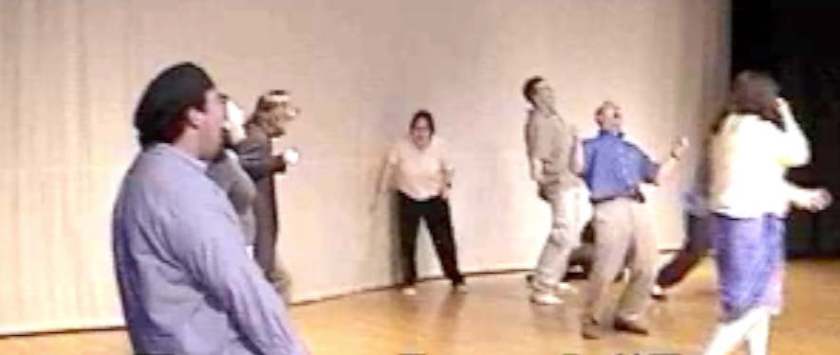
When we get all worked up, we sometimes move to energy level number seven where all we can do is scream: “AHHHHHHHHRGGGGHHHHHH!” and collapse to the floor. Back to energy level number one. We’re exhausted again and feel heavy. Kind of feels like most days of my life…
Debriefing
After completing the activity, I gather students in a circle to talk about it. I always ask, in theater, which energy level should we avoid like the plague? Inevitably they say, “Number one!” to which I reply, “My friend, Mark, once played Julius Ceasar. After they stabbed him he had to lie on stage for 15 minutes of Mark Antony’s speech. He was in three shows and was tired. I often had to kick him so he would stop snoring. That’s pretty much energy level number one”
“Okay, energy level number two.”
“Imagine you are wounded, or really old. I’ll bet you would walk like that…hunched over, feeling like you had a heavy weight on your back.”
“Okay, four! Yeah, energy level number four, avoid that.”
Exactly. Energy level number four doesn’t “read.” It communicates nothing. It’s emotionless. One, two and three can show several different emotional states. Six and seven, definitely. But four? Boring. Uninvolved. Purposeless.
I suggest focusing on energy level number five. Make sure your character work to accomplish something. Know what they want and that getting it is important to them. If your characters don’t care, the audience won’t care and they’ll be bored with your scene.
Think of theater like the Arnold Schwarzenegger movie Kindergarten Cop. Has anyone seen it? No? I know, I’m getting too old. Anyway, in this movie, Arnold plays a police officer. He’s used to getting what he wants, justice, by beating up bad guys. However, when he takes an undercover job as a kindergarten teacher, he can’t beat up little kids, so has to learn to use LANGUAGE to achieve his goals. That’s what theater is all about. Think about how your character uses words to accomplish goals.
Bonus Strategies
Although the Seven Levels of Energy activity works well to communicate the theory, sometimes students need some additional practice to put the concept into practice. If I see a group hovering around energy level number four, I usually give them two additional challenges.
Four Corners
I place each of the scene members in the four corners of the performing space…the farther apart, the better. If we rehearse in the auditorium, I tell them to stand way out in the corners of the seats. “Okay,” I say. “Stay in character and project your lines across the space to your scene partners.” While this challenge works well for “soft talkers” as well, it helps to increase the energy with which they speak.
Speed-through
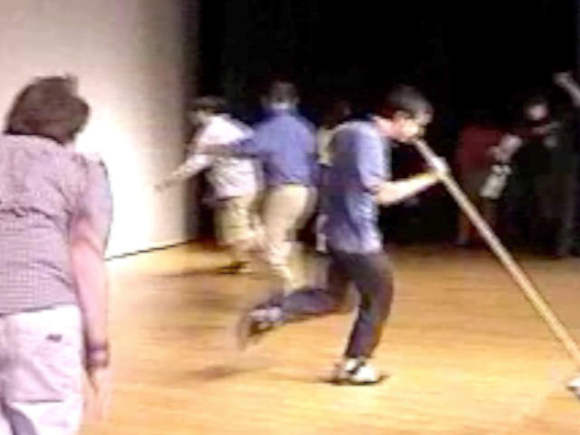
Another strategy I use to increase energy levels is the speed-through. I tell students to literally RUN through the scene, speaking as quickly as possible without losing any of the sounds of their words. Imagine that you are racing another group performing the same scene. If you drop any words, you’d have to restart, so maintain line integrity, but GO FAST! This often creates the urgency necessary to transform a lackluster energy level to a more dynamic one.
Fun Fact
I was presenting this activity at a conference in Denver one year and during energy level number six someone moved my presentation notes. I never found them. Luckily I had my presentation pretty well anchored in my head so we were able to press on without any problems. It was a fun group and well worth losing notes!
Acting Shakespeare can understandably intimidate students and inexperienced actors. This reluctance often translates into dull scenes that do little to combat the notion that Shakespeare plays are lively and dynamic. However, these teaching strategies will help reticent students understand the appropriate energy level necessary for entertaining scenes!
Most…okay all, of the time when I begin using performance to teach Shakespeare in my classroom, the actors look like they’re playing hacky-sack rather than performing a scene. That is to say, they stand in a circle and read to each other. At first, I don’t mind. I don’t want to burden them with too much too soon. After all, just getting the text can be challenging enough. However, as we move deeper into the play and closer to performance time, I want them to be able to use space and visual images to communicate ideas as well as the language itself.
I begin by showing the Queen Mab scene from the Zeffirelli Romeo and Juliet. I ask students to pay attention to the colors and the use of space by the actors. In particular, where do actors stand in relation to each other and how do these elements change over the course of the scene.
For those who know the scene, it begins with many warm colors: oranges and reds, and Mercutio appears above everyone commanding attention like an actor on stage. Mercutio’s language at the beginning reminds us of Cinderella and the Fairy Godmother with images of a carriage drawn by “a team of little atomies.” As the images grow darker, however, so does the mise-en-scene. Mercutio jumps down from the ledge, seems startled with his own line of “drums in his ears,” then separates himself from the rest of the group. The next shot reveals Mercutio alone and downhill from everyone bathed in blue light, with his words echoing, “This is she…this is she….”
On a basic level, we can talk as a class how the scene moves from bright and orange with Mercutio elevated and surrounded by friends to dark and blue with him lowered and isolated. Thus, the director reinforces the written text with a visual one.
After analyzing this scene, we synthesize one. For this process, we play a game called “Screaming Sculptures.” First, I ask how many dimensions in a given space. While metaphysical answers may vary, the class comes to the agreement that space can be defined through width, length, and height. So, I tell them, in our sculptures, we want to do our best to use as much of that space as possible.
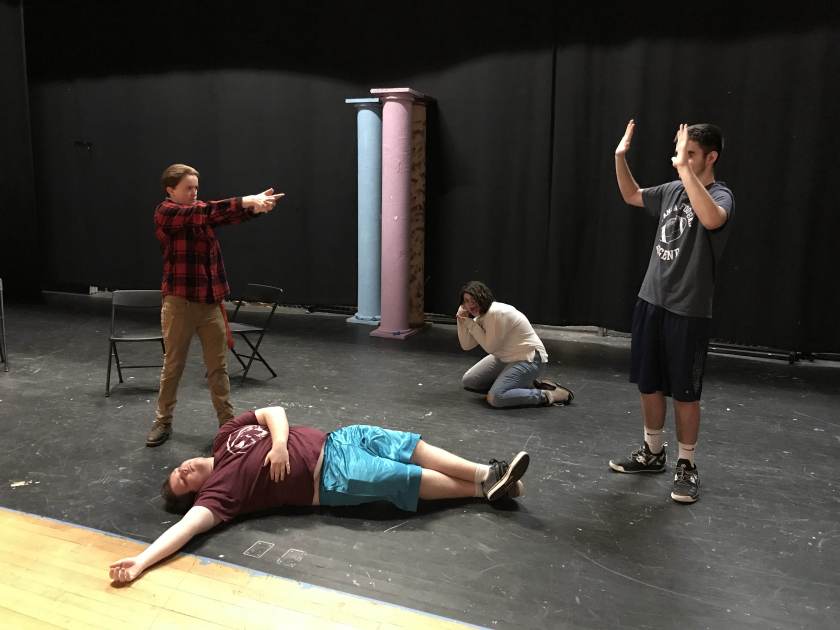
Students form groups of four or five. I will then give each group a scene that they will depict. My favorites include a baseball game, a rock concert, a bank robbery, and a day at the beach. One at a time students scream, (really just to add some more energy!) then run to the performing space, strike a pose, and freeze. The combination of all the poses should depict the scene that the rest of the class will try to guess. In addition, they should attempt to use as much of the space as possible.
Each group establishes an order of appearance…that’s all they can talk about. After the first student screams and strikes a pose, the other students must figure out what the previous students are depicting and build from that scene.
For example, in our bank robbery example above, the first student may strike a pose of a person holding a gun. The second person may run in, then stand in front of the gun with his or her hands in the air. Person number three may see that a length of the space has been covered, but not the height, so he or she may fall flat on the floor like they’ve been shot. Person four may decide that the mid-level space off to the side has not been used, so he or she may kneel behind a desk pretending to call the police.
After each group member strikes their pose, I tell the group to stay frozen, then ask the class to guess the scene and also explain each pose. At this point, I tell the sculptures that they may relax a bit, (it can be tough to hold some positions for a long time) but to stay in their general space.
Then, as a class, we critique the art. “How was their use of space lengthwise? Width? Height?” At first, students struggle to know what to do, or how to use the space, so I will offer suggestions. “What if you moved over here? What could you do to use this level?” Many times I ask the class for suggestions. After discussing the tableau, we repeat the process for each group.
I love the question “what could you do to use this level?” It helps generate some stage “business” ideas. I often tell students about a part I played in As You Like It. During rehearsal, I couldn’t really figure out what to do for stage business during the wrestling scene. No one was using the floor level, so I decided that my character would begin a betting pool and start throwing money on the floor. This created an entire subset of activity for the scene. The prop master even had money printed up with the director’s face on it!
To make the activity more complex, I sometimes facilitate “Advanced Placement Screaming Sculptures.” Here I will either give the group a vague scenario that they have to create like, “This is a family reunion portrait. Not everyone is happy to be here. Go.” Then they have to figure out, without talking, how to communicate this idea using the space. It also provides an opportunity to talk about character development. What can we learn about characters by their posture? When students find themselves truly ready for a challenge I simply tell them, “Create a tableau.” Again, without talking, one character strikes a pose and the other group members follow one at a time building from each other to create the sculpture. Then the rest of the class tries to interpret it.
This activity also works well to sort the chaos of large scenes. I remember directing Merry Wives of Windsor and trying to block the last scene. I think every character in the play is in that scene. Maybe even a few from Henry V. It looked like a flash mob. I finally said, “Okay, you’ve got 30 seconds to sculpt this scene…go!” Actors looked at each other, looked at the space, figured out their relationship to each other, and, suddenly, the ending became clear, tidy, and in the words of Scuttle, “an aesthetically pleasing configuration of” actors!
When teaching Shakespeare, incorporating the use of space to underscore the written text with a visual text can help students really see the relationships among the characters. So give it a try and let me know how it goes!
Teachers may often feel that their students’ attention span wouldn’t “clog the foot of a flea.” However, survey results from Prezi suggest they attention spans are not shrinking but evolving. According to this study, people’s attention “can be captured for long periods of time…, “ however, it must be “with compelling content that includes great stories and interesting, gripping visuals.”
Consequently, long Shakespeare passages can present challenges in the classroom. The compelling content may tell great stories, but unless the teacher has fostered the students’ ability to create their own mental “gripping visuals,” the only visuals students will see live inside their eyelids.
You could assign longer passages for homework with some sort of analysis or questions, but I wouldn’t exactly call it an interactive or dynamic activity. Plus it doesn’t address the issue of making it visual. More importantly, experiencing these great stories with the heart and the body make learning Shakespeare more powerful and more memorable.
So how do we teach it? One student reading and others listening? Small group discussions? Whole class discussion? These approaches still don’t create “interesting, gripping visuals.”
This activity captures the text, involves many participants, and creates memorable visual stimuli that not only fosters emotional response but also anchors ideas in memory. I call it “Monologue Puppeteer” because the teacher serves as the puppeteer directing students to act out the images of the passage. I often approach this activity in one of two ways.
Let’s say, for example, you’re teaching The Tempest and need to cover Prospero’s 17 ½ hour speech. (Shakespeare knew it was so long that he kept Prospero saying to Miranda, “Dost thou attend me?”) Here, the speech functions as exposition. Prospero and Miranda don’t need to experience the images. Prospero has already lived them, so he just needs to communicate information to Miranda. Thus, I have two students read these parts. (I make sure that I choose a fluid reader for Prospero!) As the students read the parts, I interrupt them and direct the other students in the class to act out the narrative. When Prospero tells Miranda “My brother…I loved and to him put / the manage of my estate” I tell another student, “go be the brother and manage his estate…whatever that means to you.” Then that student gets up and does some managy things. (He may need some encouragement and suggestion at first, but students get better at it.) Then as Prospero describes how Antonio can “grant suits” and awaken “an evil nature,” I direct the student playing Antonio to act out these images. Then add in an Alonso and Gonzalo, all miming parts read by Prospero. I usually add students to be the younger Prospero and Miranda, the boat, the library, garments and linens to get more people involved. By hearing, seeing, acting the images, the language becomes more memorable.
Other times, I want to emphasize the emotional impact. For example, in Juliet’s “My dismal scene I needs must act alone” speech, she contemplates the possibilities of drinking the potion. In order for her to focus on the experience instead of the written text, I have her stand. And another student, standing behind her, reads the part. As this student reads, I direct other students to act out the images. Juliet can watch the dagger, “lie thou there,” feel the “faint cold fear” that thrills along her bones, smell the “loathsome smells,” (It’s always fun to tell a student, “go be a loathsome smell.”) and hear the “shrieks like mandrakes.” The student playing Juliet inevitably feels claustrophobic by the end of the monologue. Even more uncanny, EVERY time I’ve done this activity with a group, I can point to any student and say, “what was he or she?” and the rest of the class can tell me exactly what image they portrayed. Even coming back to class two days later I can ask, “What did Juliet imagine before she drank the potion?” and recall nears 100 percent.
This activity can also be an engaging way to introduce Shakespeare plays. I always begin a unit by assigning parts, reading a summary and guiding students through the entire plot. Doing this before we begin helps them from becoming lost in the storyline as we progress through the unit. I omit servants and minor characters to simplify the plot but direct students to be the boat that sinks or the bush that Romeo hides behind to create more visual images and increase engagement. I also use it to review tricky parts of non-Shakespearean texts. Acting out the Boo Radley, Bob Ewell, Jem and Scout fracas under the oak tree clarifies the confusion about who had what knife.
Students Act out Richard’s Army
Engagement has emerged as a new buzzword in education over the last few years, and with good reason. It facilitates learning. And as our attention spans change, these strategies increase that engagement and create “interesting, gripping visuals” that provide opportunities for students get out of their seats and experience Shakespeare (and other texts!) visually, emotionally, and kinesthetically.
You have reviewed puns, shown examples, and discussed why they’re funny. Activate Prior Knowledge? Check! You begin the opening scene to Romeo and Juliet and model raucous laughter at the appropriate (and inappropriate) parts. And yet the students still look at you like you’ve sniffed too much glue. Then you realize…they’re right. These old references just aren’t that funny to modern audiences. Throw a couple of pool noodles into the mix, however, and you can transform archaic language into uproarious comedy.
More Matter, Less Art…
After you’ve done your due diligence by explaining puns, hand out a copy of the Sampson and Gregory in Act 1 Scene 1. (You can download a blank copy here, and a completed one here.) Tell students to look for similar-looking words that could indicate a pun. They should then circle the punning word and draw an arrow back to the word it puns against. For example:
I model the first three lines with class; then students work through the rest of the passage with a partner. After they have identified the puns, we complete a little formative assessment and review their choices. “Back in the day,” as my students love to say, I used this almost-as-archaic-as-the-puns-themselves device known as an overhead projector. Using a dry erase marker to draw circles and arrows (“And a paragraph on the back explaining what each one was to be used as evidence against us!” Sorry…couldn’t resist.) I explained each line. These days, I usually project my screen and simply highlight the puns as students follow along and make adjustments as necessary. With a tablet, I’m sure you could upload the text and then use a drawing app as a visual reference for students.
Before getting too deep into this activity, I also consider my audience. The puns at line 20 become sexual as Sampson and Gregory take bawdy stabs at each other. Gregory, with stereotypical male swagger, claims that he will “cut off the heads of the maids…Take it in what sense thou wilt.” Sampson, belittling Gregory’s male equipage, responds, “They must take it in sense that feel it.” Not to be put down, Sampson maintains that “me they shall feel when I am able to stand.”
It is up to the teacher’s style, community attitude, and student maturity how, or if to deal with this subject matter. When I workshop this scene with middle schoolers, I cut this part out. Most of my high school students get the jokes themselves when I simply explain that these jokes refer to virginity and “the apparent state and size of a part of male anatomy.” Attention is usually rapt at this point.
Suit the Action to the Word
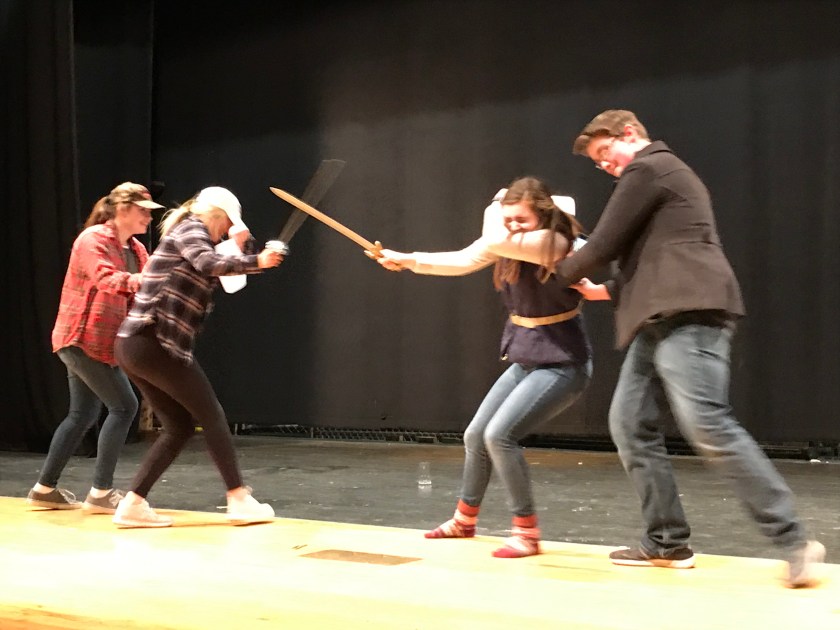
Then I pull out the nerf noodles. Waving them around usually ensures a rapid and enthusiastic mustering of willing participants. I choose two students to read and tell the rest of the class that they must help act it out. I give the readers the noodles and tell them that whenever they come to a circled word that has an arrow pointed back to the other character’s word, they get to whack them with the noodle The only two places they can hit them, though, are the shoulder and the hip. (With some high school boys, especially, we’d have to begin concussion protocol if they were allowed to hit each other in the head!) Also, I remind them that they are friends and not enemies. This is a verbal joust for fun, not mortal combat. (That comes later!)
In order to emphasize the playfulness of the text, I set the scene. I tell students to imagine that they have just finished lunch and are hanging around waiting until it’s time to go back to class or work. Sampson and Gregory have started talking and making jokes at each other. At each palpable hit, the audience students must laugh uproariously, even if it isn’t overly funny. This helps set up not only the mood of the scene but also provides something for Sampson and Gregory to play off. Furthermore, their participation invites engagement from everyone and not just the readers.
Then off we go! Sometimes I have to encourage more reticent students to increase the enthusiasm of their laughing, but suddenly, dull, boring and archaic language becomes engaging. Many times, too, Sampson and Gregory start playing to the audience, pausing for dramatic effect, and taking bows. The energy from the audience pushes them to a point where they can simply react as opposed to worry about how to act.
Then we get to the brawl, but that’s a subject for another post….
Our Revels Are Now Ended
After completing the scene I like to discuss its impact. How did students like the activity? What mood did the scene generate? Why does Shakespeare open the play like this? Students often present insightful ideas here and debriefing the experience often solidifies the idea that “Hey, this Shakespeare unit might be fun after all!”
Although I love opening Romeo and Juliet with this activity, it can be effective for other Shakespearean word-play situations as well. For example, I often use it for Beatrice and Benedick, in Much Ado, Falstaff in and Hal in Henry IV Part 1, Lorenzo and Lancelot Gobbo in Merchant of Venice or Feste in Twelfth Night. I love it because of its balance. The close textual reading requires students to really grapple with sophisticated language, however, they discover the rewards in a fun, engaging, visceral and visual experience to truly solidify their learning.
So break out those pool noodles! By beginning the Romeo and Juliet unit with a “15 Minute” play activity, then further engage them with the wordplay of this scene, your students will come to class the next day and excitedly ask, “Are we doing Shakespeare today?”
If you’ve never seen comedian John Branyan’s “Three Little Pigs” Shakespeare style, go watch it now. It’s hilarious. I’ll wait.
Still laughing? (I loved it so much I memorized it as a monologue.) But he’s right: Shakespeare used over 30,000 words in his writing. While researchers suggest that modern audiences use more than the 3000 words suggested by Branyan, many teachers can identify with his line “‘What light through yonder window…’ What? Does this come on a DVD?”
In order to convince students that Shakespeare can be fun, we must first show them that the language can be accessible. (Hey, a significant portion of Shakespeare’s original audience couldn’t even read!)
I use variations of the following activities to accomplish simple goals. First, I want to foster familiarity. In other words, provide enough repetitions in speaking and listening so that the language starts to hear and feel “normal.” Second, I want to build voice skills of accurately reproducing the phonetic sounds as well as the proper phrasing. And I want to do this in ways that engage all students.
The structure of the Language
Students are not used to reading text in verse format. Thus, the inevitable pauses they place at the end of every line, needed or not, distort the rhythm and parsing of meaning. To help them, I use an activity called “Text Surfing.”
I say a sentence containing a list separated by commas. Something like, “This weekend I’m going on a canoe trip so I need to remember my paddle, my PFD, my canoe, and my splash gear.” Then I ask the students: when I finished saying “paddle,” how did you know that I wasn’t done my list? After several smart-alecky answers, we get to the truth of that matter that my voice inflection stays high, whereas, after “splash gear,” my voice inflection goes down.
Then I write the sentence on the board and illustrate my rising inflection by making a swooping motion up with my hand at each comma. I direct the students to follow along with me.
After introducing the concept I break out the Shakespeare text. I tell students to read it while paying attention to the punctuation. At everything except a period or exclamation point, they should raise the inflection of their voice and, for emphasis, make the swooping motion with their hand. I will sometimes pair them up and have them switch at every complete sentence if I feel they need some social interaction. I have them read for five minutes or so, circulating around the room and reminding them to “keep swooping!”
I tell them not to worry about meaning at all. In fact, I don’t care if they “understand a single word!” I simply want them to pay attention to the phrasing.
I like this activity for its simplicity. Rather than overwhelming students with complex meanings early in the unit, I focus on building success and familiarity one phrase at a time.
I call the second activity “Traveling Passage.” Similar to “Text Surfing” this activity focuses on the phrasing of the language. It adds, however, another layer of complexity. In addition, I like it because I can add movement. In this activity, I ask students to walk around the room while reading a selection of text. (Verse works better than prose.) When they come to a comma, change direction. When they come to a period, stop. When they come to an exclamation point, jump. When they come to a question mark, kneel. When they come to a semicolon or colon, shuffle their feet.
This can become a bit chaotic especially with a larger class in a small space. Embrace the chaos! The point is not to think about the theological ramifications of killing Claudius while he prays but rather to increase familiarity with the language and, hopefully, teach neophyte Shakespeareans not to stop at the end of every line. Understanding the nuances of meaning will come later!
Sometimes I find reducing Shakespeare to the ridiculous provides a wonderful catalyst for shattering student illusions that studying Shakespeare should be reverential and plodding. The language concept of inversion often contributes to this notion. Placing the subject and verb at the end of the sentence just sounds weird. Until you justify it by saying that Yoda does it all the time. For example, “When nine hundred years old you reach, look as good you will not.” If I have several Star Wars fans in class, I ask them to quote their favorite Yoda lines with inversion.
Then comes “Inversion Improv!” I ask for three students volunteers. I give them a situation like, “You’re on your way to a concert but got a flat tire,” and two minutes to improvise a scene where they introduce and solve the problem…while speaking in inversion the entire time. While it can be a challenge for some students, this activity has a huge upside: it’s funny, it’s dynamic and interactive, and it provides an opportunity to illustrate a component fo Shakespeare’s language and make it more understandable.
Language study does not have to be boring. In fact, it definitely shouldn’t be early in the unit. We can get more in-depth as we progress through the play. However, by using these hands-on, kinesthetic, and auditory activities, teachers can provide the scaffolding for more complex learning.
We spend way too much time unpacking the language of rubrics. And, yes, I know, we want to make learning objectives clear for our students. And, yes, we want instruction, in some degree, to be data-driven. But when I think of the amount to time we spend sitting around in meetings trying to cram content into a digital receptacle and trying to pinpoint what we really mean by “sophisticated topic development,” I feel like a fly to the wanton gods. The most important learning can’t be measured in rubrics.
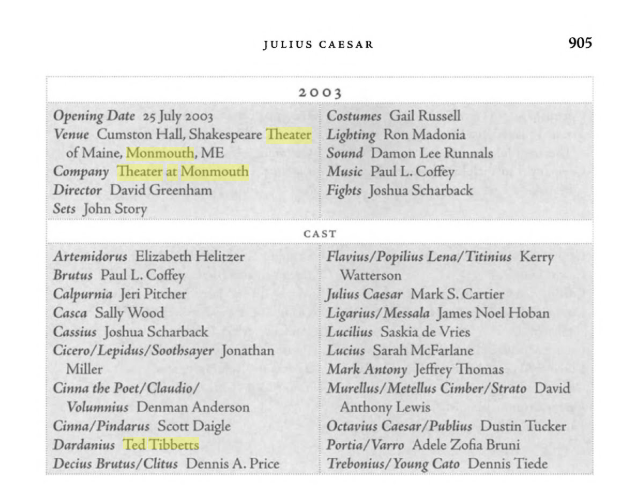
I was never an actor. In high school musicals, I played trombone in the pit band. In college, I played guitar and sang the songs with a lot of lyrics. (I was the only one who could remember all the words.) Throughout that time, however, I became more and more interested in Shakespeare. In graduate school, I TA’d for a Shakespeare class. Then I saw audition signs for Much Ado About Nothing. I figured if I truly was going to do this “Shakespeare Thing,” (whatever that was) I should experience it from the stage as well as the library. Besides, I was a musician and vocalist, how hard could a theater audition be?
I memorized, I practiced, I showed up…I forgot most of my lines. I fled to the comfort of the library (or was it the pub?) thinking my Shakespearean acting career was a tale told by an idiot. A week later I received a call from a grumpy and terse stage manager: “Do you want this part or not?”
“Part? What part?”
“You didn’t check the door?”
“What door?”
Various mumblings and expletives.
Anyway, I had garnered the part of George Seacoal. A brilliant casting, actually. The director awarded the educated but hopelessly inexperienced actor with a three-line part, who could actually be considered the hero of the play: he captures the villain. (Fun fact, by the way, the kid playing Claudio had been on the TV show Who’s the Boss with Tony Danza).
So, I thought, “This is good. I can learn Shakespeare theater with a small part and finish my homework during rehearsal.
I didn’t do ANY homework during rehearsal. But what I learned about Shakespearean theater affected teaching for the rest of my career. For years I had learned Shakespeare from an intellectual perspective, and, on occasion, from an audience’s perspective. However, the director facilitated activities in which students experienced the text with their hearts and bodies as well. And the rhythms, lines, language, and images continued to resonate in my head for hours after rehearsal.
When I began teaching Shakespeare in the classroom, I used similar strategies. While I didn’t have that director’s experience or theater knowledge, I did the best I could…and I attended workshops and conferences and researched theater techniques.
Woohoo! There I am as Dardanius! (Who the heck is Dardanius?!)
I also met the managing director of a local Shakespeare theater who visited my class once. I asked him if I could audition for a play. (I decided to leave out the details of my last audition.) He said, “no need, I’ve got a part all picked out for you.” So, I went on to add “Professional Shakespeare Actor” to my resume. Which really means they paid me $75 for the summer, that didn’t even cover gasoline expenses, to play various tiny roles…that I loved! I wasn’t in it for just the acting; I wanted to watch professionals prepare. I carried around a notebook, not for my own parts, but to ask the pros how they approached the text. I added these strategies to my teaching arsenal.
This approach made all the difference. Students showed up to school 15 minutes early to ask if they could work on their scenes. I started teaching a Shakespeare through Performance elective. Several students went off to a summer Shakespeare program. They went to the drama club, then came to me and said, “It was pretty cool, but it wasn’t Shakespeare. What if we had a separate club just dedicated to Shakespeare?” I thought, “Well, we’d probably have a dozen or so kids, why not?”
We ended up with around 25 students in the club, which turned out to be one of the most powerful student groups with which I’ve worked. In the fall we worked on skill development, ensemble building, and everyone learned a monologue (including me). In the winter, we cut a play to a 15-minute farce. In the spring we produced a full-length Shakespeare play and the first week of summer vacation we spend at the Royal Shakespeare Company workshopping with RSC actors during the day and attending the theater at night. It was truly an incredible experience. We completely took over a Bed and Breakfast in Stratford. One year I had the forethought to buy an extra ticket to the evening shows “just in case,” so I invited Bridget, the B&B owner to join us for the evening. “That would be lovely,” she said in her proper English accent. “I haven’t had a chance to get out to the theater all season. And” she added with a bit of a twinkle in her eye,” I know where the actors go after the show.”
So off to Comedy of Errors that night. Then to the Dirty Duck after the show to, hopefully, catch up with some of the actors. They came in alright, with their friends, and were immediately accosted by my students asking them to sign programs. Seeming a bit taken aback they politely acquiesced, then returned their attention to their peers.
For better or worse, American high school students are louder than British actors. Loud as they might have been, however, ignorant they were not. All had covered a Shakespeare play each year in English class. Most had taken the Shakespeare elective which covered four or five plays a semester, and in the club, we had referenced, workshopped or performed several more. So, forsooth, many of these students could speak knowledgeably about 15 or more plays. Enthusiastically they were connecting the Comedy of Errors to other plays, quoting various lines, talking about their favorite parts of the play and I could see the actors looking over with quizzical glances seeming to say: “Who the hell are these kids?” Within an hour the actors had ditched their friends and were hanging out with the students talking “shop.” (By the way, this can’t be assessed with a rubric. Can you imagine, though? “Can converse knowledgeably in a pub with an RSC actor about a line from Titus Andronicus…Exceeds the Standard!”)
I have continued to teach Shakespeare this way ever since. While I have changed schools and no longer direct a Shakespearean acting troupe, I still look forward to…okay, long for, those Shakespeare units. Admittedly, some of my more introverted students don’t look forward to it as much as me, but many do. And the growth that results from performing Shakespeare rivals any learning experience I witness in school. (To read my story about MaryAnn, click here!)
If someone like me, who forgot most of their lines in an audition, can use theater strategies to teach Shakespeare, anyone can! Give it a try, share the experience with your students, rethink the “Complete Works” and put the play back in Shakespeare!





 Teaching Shakespeare through Performance